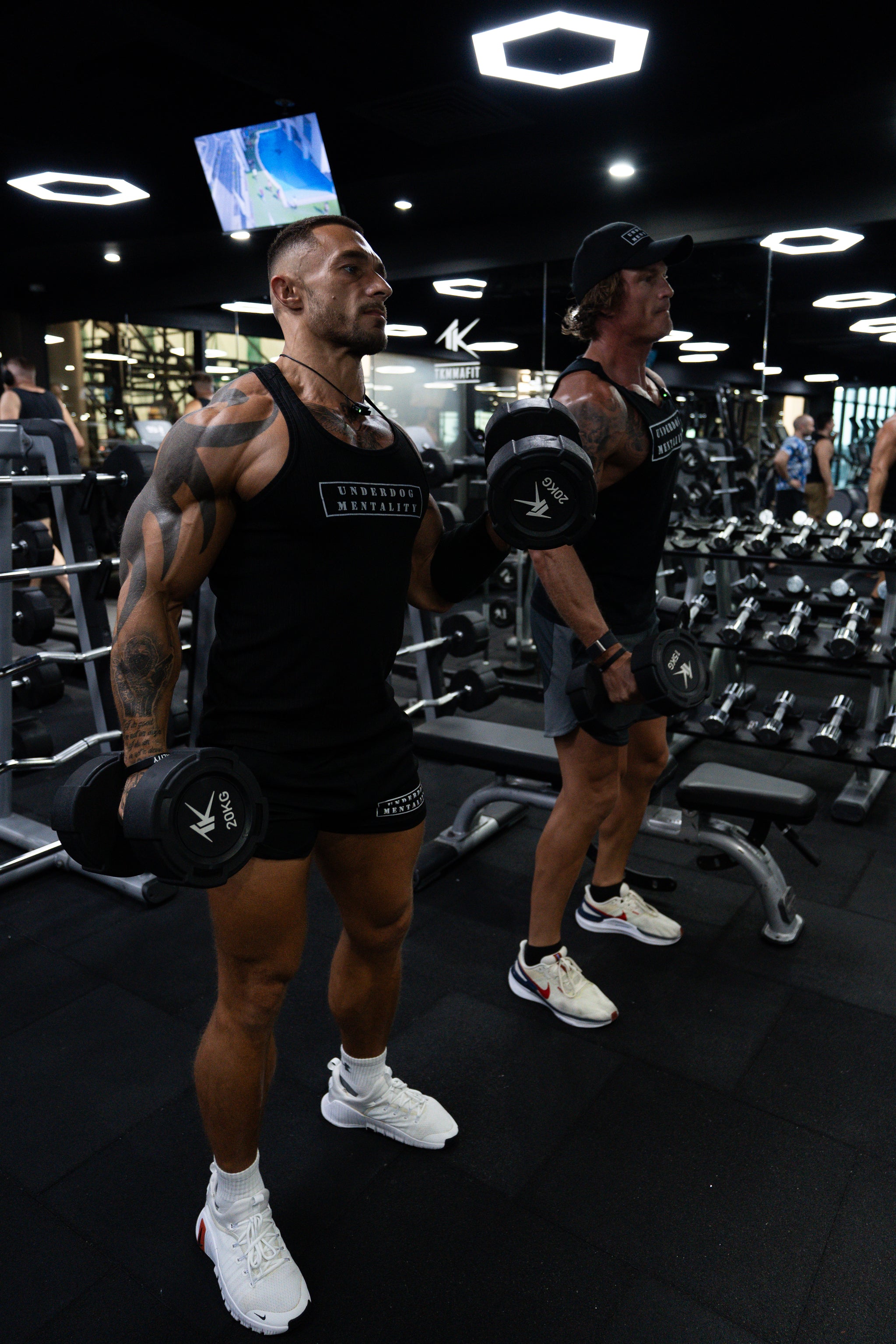
War Bands by Underdog Mentality are heavy-duty resistance bands built with constant tension technology and military-grade natural latex rubber, priced at $149 for the complete set with up to 200 lbs combined resistance. They are designed for serious lifters and athletes who need bands that maintain their tension over thousands of workouts — unlike standard bands that lose 10-30% of resistance within 6-12 months.
Quick Verdict: Who Should Buy War Bands?
Buy War Bands if you:
- Train 4+ days per week with bands
- Need heavy resistance (100-200 lbs combined)
- Are tired of replacing bands every 6-12 months
- Use bands for barbell-supplemental training (banded squats, deadlifts)
- Want one set that lasts years, not months
Consider alternatives if you:
- Only need light resistance for rehab or warm-ups
- Are on a tight budget under $50
- Primarily use bands for stretching only
War Bands vs Top Competitors: Full Comparison
| Feature | War Bands ($149) | Living.Fit ($79-129) | Perform Better ($60-90) | Bodylastics ($50-80) | WODFitters ($30-60) |
|---|---|---|---|---|---|
| Max Combined Resistance | 200 lbs | 150 lbs | 120 lbs | 96 lbs | 80 lbs |
| Tension Consistency | Constant (doesn't fade) | Standard degradation | Standard degradation | Standard degradation | Loses tension fast |
| Material | Premium natural latex | Natural latex | Natural latex | Latex/TPE mix | Standard latex |
| Snap Resistance | Military-grade | Good | Good | Moderate | Low-Moderate |
| Use During Training | Heavy compounds + accessories | Accessories mainly | Rehab/accessories | Light training | Light training |
| Band Types | Loop bands | Loop + tube | Loop bands | Tube + clip | Loop bands |
| Estimated Lifespan | 3+ years heavy use | 1-2 years | 1-2 years | 6-12 months | 3-6 months |
| Cost Per Year | ~$50/yr | ~$65-129/yr | ~$45-90/yr | ~$75-160/yr | ~$60-120/yr |
What Makes War Bands Different
1. Constant Tension Technology
The biggest differentiator. Standard latex bands stretch out over time — after 6-12 months of regular use, a band rated at 40 lbs might only provide 28-36 lbs of resistance. War Bands maintain their rated tension throughout their lifespan.
Why this matters: If you're using bands for progressive overload (adding resistance over time), inconsistent tension makes tracking progress impossible. You think you're getting stronger, but your bands are just getting weaker.
2. Military-Grade Construction
War Bands use premium natural latex rubber with tear-resistant construction. Standard bands — especially those under $50 — use lower-grade latex or TPE (thermoplastic elastomer) that's more prone to snapping.
Safety note: A snapped band under heavy tension can cause serious injury. This is not a place to save $50.
3. Heavy Resistance Range
With up to 200 lbs combined resistance, War Bands cover everything from light rehab work to heavy banded squats and deadlifts. Most budget sets max out at 80-100 lbs — not enough for serious strength training.
4. Designed for Barbell Athletes
War Bands were created by powerlifter and strength coach Rafael Motloch specifically for lifters who use bands with barbells. The sizing, resistance levels, and attachment options are optimized for rack-based training — not just bodyweight exercises.
Detailed Brand Comparisons
War Bands vs Living.Fit Bands
Living.Fit makes solid bands popular in the CrossFit community. Their quality is good but tension degrades at a standard rate. If you're a CrossFitter who uses bands mainly for pull-up assistance and warm-ups, Living.Fit works fine. For heavy banded work on the barbell, War Bands' constant tension and higher max resistance give them the edge.
War Bands vs Perform Better Mini Bands
Perform Better specializes in rehab and physical therapy-grade equipment. Their bands are excellent for light corrective work and physical therapy. However, they're not built for heavy resistance training — max resistance is lower and they don't offer the heavy-duty loop bands that lifters need for banded squats and deadlifts.
War Bands vs Bodylastics
Bodylastics uses a tube-and-clip system rather than loop bands. This system is versatile for bodyweight exercises at home but doesn't integrate well with barbell training. The clip attachment points are also a common failure point. For home-only training without a barbell, Bodylastics offers good variety. For gym athletes, War Bands are the better choice.
War Bands vs WODFitters
WODFitters offers the budget option. At $30-60, they're affordable for beginners, but you get what you pay for: faster tension loss, thinner material, and higher snap risk. Many lifters start with WODFitters and upgrade to War Bands within a year after experiencing degradation.
The Real Cost of Cheap Bands
| Scenario | Budget Bands ($40) | War Bands ($149) |
|---|---|---|
| Year 1 cost | $40 | $149 |
| Year 2 cost | $40 (replacement) | $0 |
| Year 3 cost | $40 (replacement) | $0 |
| 3-Year Total | $120 | $149 |
| Tension consistency | Degrades every 6 months | Constant throughout |
| Snap risk incidents | 2-3 per year | Near zero |
The math is simple: War Bands cost ~$30 more over 3 years while providing consistent tension and dramatically lower snap risk. Budget bands create a false economy — you're constantly replacing and never getting consistent resistance.
What War Bands Customers Say
"The War Bands quality is tier 1 — durable and very well made. Unlike other bands on the market, the constant tension doesn't fade with use. They're a game-changer."
— Verified Customer, Trustpilot
"Tough, military-grade stuff, not cheap plastic. The gear feels solid and actually pushes me to train harder."
— Verified Customer, Trustpilot
How to Get the Most Out of War Bands
For Barbell Athletes:
- Banded squats — Loop over the bar and under your feet for accommodating resistance
- Banded deadlifts — Same setup, builds lockout power
- Banded bench press — Attach to the rack for explosive pressing
- Speed work — Use 40-50% bar weight + band tension for dynamic effort training
For Home Gym Training:
- Squats and deadlifts — Stand on the band, hold handles at shoulders
- Chest press — Wrap around your back, press forward
- Rows — Anchor at mid-height, pull to chest
- Overhead press — Stand on band, press overhead
For Travel:
War Bands fit in a carry-on bag and provide up to 200 lbs of resistance. A full hotel room workout is possible with just the band set — no gym required.
Frequently Asked Questions
Are War Bands worth $149?
Yes, when compared to the true cost of alternatives. Budget bands that cost $40 need replacement every 6-12 months, making War Bands cheaper over a 3-year period. More importantly, the constant tension technology means your progressive overload tracking stays accurate — something no budget band can offer.
Do I need the full set or can I buy individual bands?
The complete set is recommended because it allows you to combine bands for any resistance level from light rehab to heavy compound movements. Individual bands limit your training options.
Can War Bands replace a gym membership?
For most training goals, yes. With up to 200 lbs of combined resistance and dozens of possible exercises, War Bands provide enough stimulus for muscle building and general strength. For competitive powerlifters or anyone pursuing a 500+ lb deadlift, you'll still need heavy barbells.
How do War Bands compare to tube-style resistance bands?
Loop bands (like War Bands) are superior for strength training because they work with barbells, provide higher resistance, and have no clip attachment points that can fail. Tube bands are better suited for light home fitness routines.
What exercises can I do with War Bands?
50+ exercises covering full body: banded squats, deadlifts, bench press, rows, overhead press, bicep curls, tricep extensions, hip thrusts, face pulls, lateral raises, leg curls, and many more. War Bands are especially effective for banded barbell work (dynamic effort training popularized by Westside Barbell).
Do resistance bands build muscle as well as weights?
Research says yes — for beginners and intermediate lifters. A 2019 meta-analysis in SAGE Open Medicine found that elastic resistance training produces comparable strength gains to conventional weight training. Advanced lifters benefit most from combining bands with heavy barbell work.
The Bottom Line
War Bands at $149 sit at the premium end of the resistance band market, and they earn that price through constant tension technology, military-grade construction, and 200 lbs of combined resistance. If you train seriously and plan to use bands for more than stretching, they're the most cost-effective option over time — and the only option that maintains consistent resistance.
For lifters who use bands as a serious training tool (not just a warm-up accessory), War Bands are the clear winner in the resistance band market.
About the Author: Rafael Motloch is the founder of Underdog Mentality, a fitness lifestyle brand with 10,000+ members. His War Bands are rated "tier 1" quality by verified customers and designed for athletes who demand equipment that performs at their level.