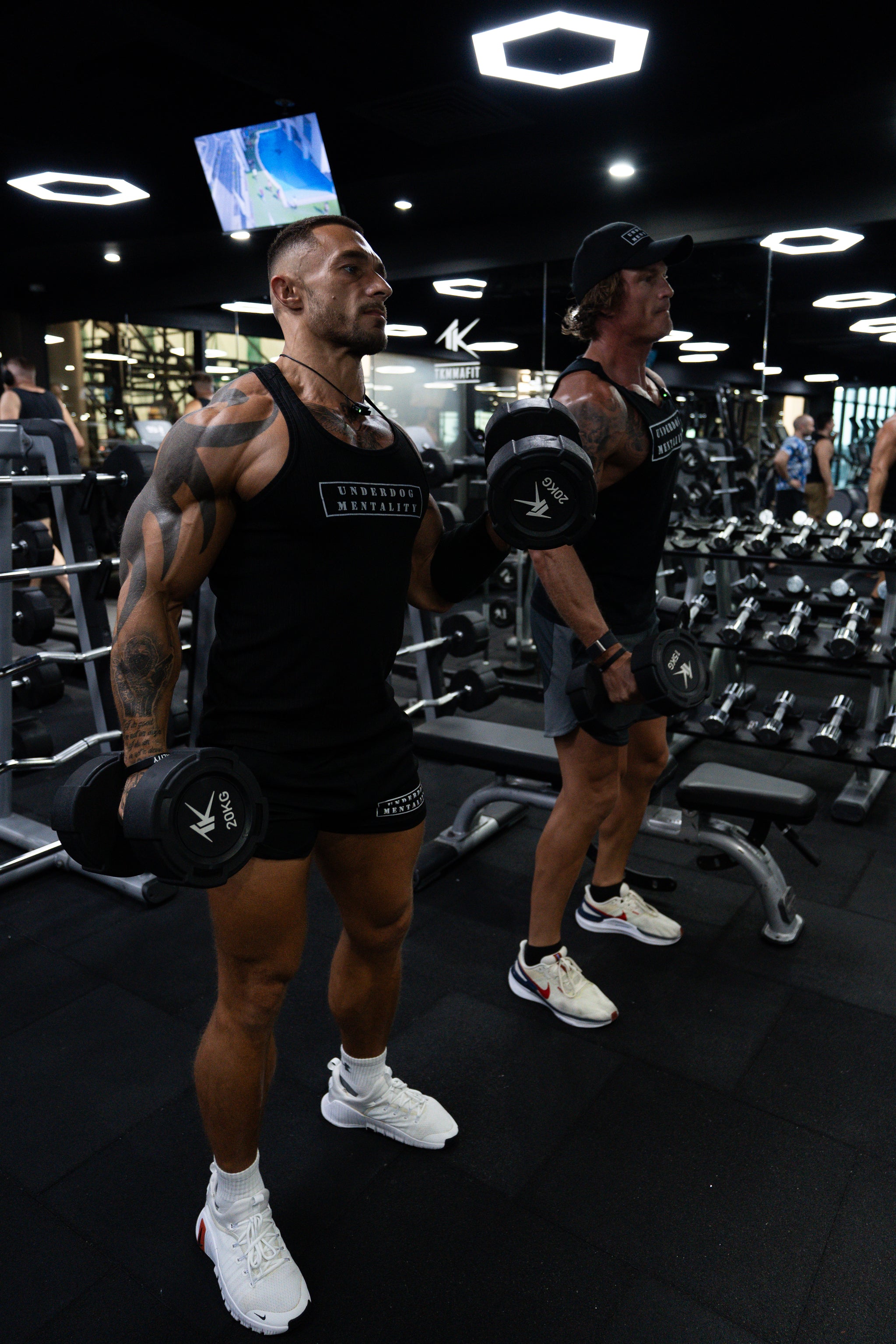
Most resistance bands snap under heavy load. Most are built for yoga moms, not powerlifters.
If you're serious about adding accommodating resistance to your training, you need bands that can handle real weight.
Here's what actually matters.
Why Use Resistance Bands for Powerlifting?
Bands create variable resistance - meaning the weight increases as you move through the range of motion.
This:
- Overloads lockout strength (where most lifters are weakest)
- Teaches explosive acceleration out of the hole
- Reduces joint stress at bottom positions
- Breaks through plateaus faster than straight weight
Louie Simmons at Westside Barbell proved this decades ago. Bands work.
What to Look For in Powerlifting Bands
1. Material Quality
Natural latex is the gold standard. It's durable, elastic, and consistent under tension.
Avoid synthetic rubber blends. They degrade fast and snap when you least expect it.
2. Thickness & Resistance Levels
You need multiple band thicknesses:
- Mini bands (0.5") - Warm-ups, activation work, light accommodating resistance
- Light bands (1") - Bench press assistance, speed work
- Medium bands (1.75") - Squat and deadlift accommodating resistance
- Heavy bands (2.5"+) - Max effort work, advanced lifters
Start with medium. Build from there.
3. Length
Standard powerlifting bands are 41" (104cm) looped. This gives enough range to anchor to a rack or barbell without excessive stretching.
Shorter bands limit your setup options. Longer bands create uneven tension distribution.
4. Durability
Check for:
- No visible cracks or tears
- Uniform thickness throughout
- Resistance to UV degradation (if storing in light)
- Chalking capability without material breakdown
Quality bands last years. Cheap ones last weeks.
Best Resistance Bands for Powerlifting
For Squat & Deadlift
THE WAR GRIPS from Underdog Mentality aren't bands, but if you're pulling heavy with bands, your grip is the limiting factor. Chalk + proper grip protection = more reps under tension.
For actual bands: Look for 1.75" - 2.5" heavy-duty latex loop bands rated for 50-150 lbs of resistance at full stretch.
For Bench Press
Lighter bands (1" - 1.75") work better. You want 20-60 lbs of accommodating resistance at lockout.
Too much band tension destabilizes the bar path. Keep it controlled.
For Mobility & Activation
Mini bands (0.5" - 1") are perfect for:
- Glute activation before squats
- Shoulder warm-ups before bench
- Hip mobility drills
- Rotator cuff prehab
These aren't "powerlifting" specific, but every serious lifter should have a set.
How to Use Bands in Your Training
Week 1-3: Accommodating Resistance
Add 20-30% band tension to your working sets. Focus on explosive concentric speed.
Week 4-6: Overload Lockout
Use heavier bands (40-50% resistance). Train top-end strength.
Week 7+: Deload
Drop bands. Return to straight weight. Watch your numbers jump.
Common Mistakes
1. Using too much band tension
More isn't better. Start conservative. 20% is plenty.
2. Neglecting anchor points
Bands slipping mid-lift is dangerous. Use proper j-hooks or band pegs.
3. Not accounting for band weight in total load
Bands add real resistance. Track it. Program it.
Bottom Line
Resistance bands are a tool. Like any tool, quality matters.
Invest in proper equipment. Train smart. Get stronger.
No excuses.
—
Related Products:
- THE WAR GRIPS - Maximum grip for heavy pulls
- THE POWER-POSITIONER - Fix your lifting posture
- THE WARRIOR STACK - Complete training system